Beyond the Main House: Understanding California’s “Other Structures” Coverage
You’ve got a home insurance policy, right? Good. Most folks do. And you probably know it covers your main house – the dwelling itself. But what about everything else on your property? That detached garage? The fence running along your yard? Maybe a pool house or a shed where you keep your tools?
These are what insurance companies call “other structures.” And in California, with our unique landscapes, building trends, and natural hazards, what covers these structures isn’t always as straightforward as you might think. Honestly, it’s an area many homeowners overlook until it’s too late.
What Exactly Counts as an “Other Structure”?
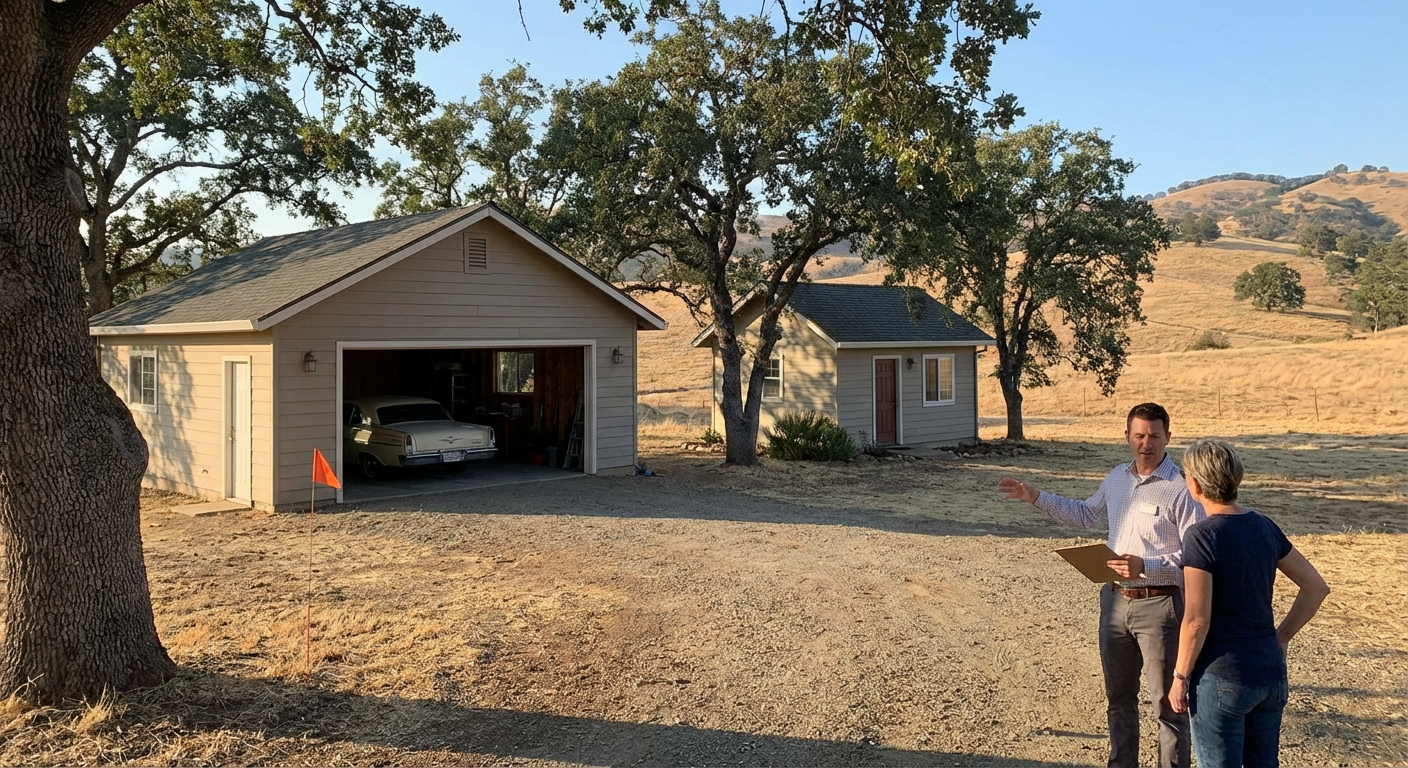
Think of it this way: if it’s on your property but isn’t physically attached to your primary residence, it’s probably an “other structure.” The classic examples include a detached garage, a standalone shed, or a guest house. But the list goes on.
- Detached Garages and Carports: Separate from your main home.
- Sheds: For gardening tools, storage, or even a small workshop.
- Fences and Walls: Both perimeter fences and retaining walls.
- Pool Houses or Cabanas: Structures near your pool.
- Gazebos and Pergolas: Outdoor living structures.
- Driveways and Walkways: Paved surfaces leading to or around your home.
- Accessory Dwelling Units (ADUs): This is a big one in California, and we’ll get to it.
- Mailboxes: Believe it or not, sometimes even these are included.
The key here is “detached.” If it’s connected to your house, like an attached garage or a deck built onto the back, it falls under your main dwelling coverage. Big difference.

The Standard 10% Rule: Is It Enough in California?
For most standard homeowner policies (HO-3, for example), your “other structures” coverage is typically set at 10% of your dwelling coverage. So, if your main house is insured for $500,000, you’d automatically have $50,000 for your other structures.
The short answer is yes, that 10% is standard. The real answer is more complicated, especially here in California. For a small shed and a fence, $50,000 might be plenty. But what if you have a substantial detached garage, an expensive custom fence, or — more and more common in places like Los Angeles or the Bay Area — a fully built-out ADU? Suddenly, that $50,000 looks pretty thin.
Consider the rising costs of construction. Building materials jumped significantly over the past few years. A simple fence replacement in Ventura County after a windstorm could easily run you five figures. A new detached garage? You’re talking six figures. Many homeowners are simply underinsured in this category without even realizing it.
California’s Unique Challenges and Your Other Structures
Living in the Golden State means dealing with certain realities. Wildfires, mudslides, and even just strong Santa Ana winds can wreak havoc on your property. Your main house might survive a fire, but a wooden fence or an older shed on the perimeter could be completely destroyed.
Think about the fires that swept through areas like Paradise or the hills above Malibu. It wasn’t just homes that burned. Outbuildings, workshops, and even elaborate landscaping features were lost. And while earthquake damage is a separate beast — requiring a specific endorsement or a separate policy — the general risks to detached structures here are higher than in many other states.
The ADU Boom: A Special Case for “Other Structures”
California has seen an explosion of Accessory Dwelling Units. These backyard homes, often built for family members or as rental income properties, can be incredibly valuable. They’re not just sheds; they’re fully functional living spaces, complete with kitchens, bathrooms, and utility connections.
But here’s the thing: if your ADU cost $200,000 to build, and your “other structures” coverage is capped at $50,000, you’ve got a massive gap. A fire, a severe storm, or even a vehicle impact could leave you significantly out of pocket. Many insurers are adapting, offering specific endorsements or even separate policies for ADUs, recognizing they’re not just another shed.
Don’t just assume your ADU is fully covered by that standard 10%. It’s a common mistake, and it can be an expensive one. This is definitely a conversation to have with your agent.
Fences, Walls, and the Overlooked Costs
Most people don’t think much about their fence. It’s just… there. But a long, custom-built fence or a substantial retaining wall can be surprisingly expensive to replace. Wildfires often take out long stretches of fencing. Mudslides, common in areas affected by recent fires, can completely collapse retaining walls.
Also, consider shared fences. If your fence is damaged, you might be responsible for half the cost, or even the full cost if it’s entirely on your property. That standard 10% might barely cover a few sections, let alone a whole perimeter.
Pools, Spas, and Their Attached Equipment
A swimming pool itself isn’t usually considered an “other structure” for physical damage, as it’s typically built into the ground. However, the pump house, heating equipment, and even some elaborate decking around the pool might fall into this category. And if you have an above-ground pool, that’s a different story altogether.
But wait — there’s also the liability aspect. Pools are a huge liability risk. While liability coverage is part of your main homeowner policy, ensuring your physical pool equipment and any detached pool structures are adequately insured for damage is still important. A burst pipe in the pump house could cause significant damage, for instance.
When 10% Isn’t Enough: Increasing Your Coverage
If you’ve got valuable detached structures, that 10% figure is likely insufficient. The good news? You can almost always increase this coverage. It’s called an “increased other structures” endorsement, and it allows you to raise the limit to 20%, 30%, or even higher, depending on your needs and your insurer.
How do you figure out how much you need? Start with an inventory. Walk around your property. Measure your detached garage. Estimate the cost to rebuild your ADU from the ground up. Get quotes for replacing your fence. It takes a little effort, but it’s far better than discovering you’re short after a disaster.
For many California homeowners, especially those with ADUs or extensive property features, bumping up this coverage is a smart move. It adds to your premium, yes, but often not by as much as you might expect given the added protection.
The FAIR Plan and Other Structures: Limitations to Know
For homeowners in high-risk wildfire areas, securing traditional insurance can be tough. That’s where the California FAIR Plan comes in – a state-mandated program that acts as an insurer of last resort. It’s designed to provide basic fire coverage when private insurers won’t.
However, the FAIR Plan is often quite basic. While it does offer coverage for other structures, the limits might be lower, and the scope of perils covered might be narrower than a standard policy. You’ll often need to pair a FAIR Plan policy with a “Difference in Conditions” (DIC) policy from a private carrier to get broader coverage, including liability, theft, and other perils.
If you’re relying on the FAIR Plan, it’s absolutely essential to understand its specific limitations regarding other structures. Don’t assume it mirrors a policy from State Farm, AAA, or Farmers. It doesn’t.
What Drives Up the Cost of “Other Structures” Coverage?
Several factors can influence the premium for your other structures coverage, especially when you increase the limits:
- Replacement Cost: The higher the estimated cost to rebuild your structures, the higher the premium.
- Construction Materials: Wood structures, especially in high-fire zones, can cost more to insure than, say, stucco or concrete block.
- Location: Properties in high-risk areas – like the wildland-urban interface near the Angeles National Forest or parts of the Inland Empire – will see higher costs.
- Age and Condition: Older, less-maintained structures might be more expensive to insure.
- Number and Type of Structures: A property with multiple valuable outbuildings will naturally cost more to cover than one with just a small shed.
Remember Prop 103? That’s the state law that regulates insurance rates. While it helps keep things fair, the underlying risks in California still dictate what insurers can charge. And those risks for detached structures are real.
Getting It Right: Talk to an Expert
This isn’t a “set it and forget it” kind of thing. Your property changes. You add a new fence. You convert a shed into an office. You build an ADU. Each of these changes impacts your insurance needs.
Honestly, the best way to ensure you have the right “other structures” coverage is to talk to a knowledgeable insurance agent. Someone like Karl Susman at Los Angeles Home Insurance Agency (CA License #OB75129) can walk you through your options, assess your specific property, and help you tailor a policy that truly protects everything you own.
Don’t wait for a disaster to discover you’re underinsured. A quick conversation today could save you a huge headache and significant financial loss tomorrow.
Ready to review your current coverage or explore new options for your California home and its other structures? Get a free quote today!
Frequently Asked Questions About Other Structures Coverage
Can my “other structures” coverage be used for a detached garage that I rent out?
It depends. If you’re renting out a detached garage for storage, it might still fall under standard “other structures” coverage. But if you’ve converted it into a habitable space – like an ADU – and are renting it out as a residence, you might need specific landlord insurance or a special endorsement. Regular homeowner policies aren’t designed for rental properties and often exclude damage or liability related to tenants.
What if a tree falls on my fence? Is that covered?
Generally, yes. If a tree falls on your fence due to a covered peril – like a windstorm, fire, or even vandalism – your “other structures” coverage would typically kick in to help pay for the repair or replacement. However, if the tree was diseased or poorly maintained and fell due to neglect, your insurer might deny the claim. Always check your specific policy language.
Does “other structures” coverage include the contents inside my shed or detached garage?
Not directly. “Other structures” coverage is for the physical structure itself – the walls, roof, foundation, etc. The personal property inside those structures, like your lawnmower in the shed or tools in the garage, falls under your “personal property” coverage (Coverage C) on your main homeowner policy. You might need to increase your personal property limits if you store a lot of valuable items in these outbuildings.
Is it possible to have different deductibles for my main dwelling and my other structures?
Usually, no. Your policy typically has one deductible that applies to property damage claims, regardless of whether it’s the main dwelling or an other structure. However, in California, you might have separate deductibles for specific perils, like a percentage deductible for wildfire or earthquake damage. Always clarify your deductible structure with your agent.
What if my neighbor’s tree falls on my detached shed? Whose insurance pays?
This can get tricky. If the tree was healthy and fell due to an “act of God” (like a storm), your own “other structures” coverage would typically pay for the damage to your shed. Your insurer might then try to recover costs from your neighbor’s insurer if they believe the neighbor was negligent (e.g., knew the tree was diseased and didn’t remove it). But for immediate repairs, you’d usually file with your own policy first.
Protecting your California home means looking beyond just the main dwelling. Every fence, every shed, every ADU adds value and carries risk. Make sure your insurance keeps up. For personalized advice and to ensure all your structures are properly covered, don’t hesitate to reach out to Karl Susman and the team at Los Angeles Home Insurance Agency (CA License #OB75129).
Ready to get started? Click here for a no-obligation quote!
This article is for informational purposes only and does not constitute financial advice.