Here’s what you’ll learn:
- Why California’s unique geography means flood risk is higher than you might think.
- The big difference between your standard home insurance and a dedicated flood policy.
- How the government-backed NFIP works, and why private flood insurance is growing.
- Tips for understanding FEMA flood maps and what your flood zone really means.
- What factors actually drive your flood insurance costs up or down.
- Exactly what flood insurance covers – and what it doesn’t.
- How to get a quote and the right questions to ask an agent.
Understanding California’s Flood Risk – It’s More Than Just Rivers
California, for all its sunshine and beaches, has a serious flood problem. Most people picture raging rivers or coastal surges when they think about floods. And yes, we get those. Atmospheric rivers, those long plumes of moisture stretching from the Pacific, dump incredible amounts of rain, swelling creeks and rivers across the state – from the Central Valley to the Inland Empire. But here’s where it gets interesting: floods here aren’t just about heavy rain.
Think about the wildfires that scorch our hillsides every year. When those fires strip away vegetation, the soil can’t absorb water anymore. So, even a moderate rainstorm can turn burned slopes into mudslide highways, sending debris and water barreling through homes in places like Ventura County or the Santa Cruz Mountains. That’s a flood, too. And then there’s coastal flooding, which is becoming a bigger concern with rising sea levels, threatening communities along the Pacific.
The truth is, if your property can get wet from outside water, you’re at risk. And that risk is changing. We’re seeing more extreme weather events, not fewer. So, while you might feel safe on a hill, a flash flood or mudslide can hit almost anywhere.
Step 1: Why Your Standard Home Policy Won’t Cut It
You’ve got a homeowner’s insurance policy, right? Most California homeowners do. It protects against a lot of things: fire, theft, wind damage, even someone slipping on your walkway. But here’s the thing: standard homeowner’s policies – those HO3 or HO5 forms – almost universally exclude flood damage.
It sounds counterintuitive, doesn’t it? Water damage from a burst pipe inside your home? Covered. Water damage from the river overflowing its banks? Not covered. Big difference. This exclusion isn’t just a quirk; it’s a fundamental part of how traditional property insurance works. Insurers consider floods a separate, high-severity risk that requires its own specialized coverage. So, relying on your standard policy for flood protection is like bringing a spoon to a knife fight. It just won’t work.

Step 2: Getting to Know the National Flood Insurance Program (NFIP)
For decades, the main game in town for flood protection has been the National Flood Insurance Program, or NFIP. It’s a federal program, managed by FEMA, but you don’t buy it directly from the government. Instead, it’s sold through private insurance companies you already know, like State Farm or Farmers. They act as agents for the NFIP.
The NFIP was created because private insurers largely pulled out of the flood market years ago, finding the risk too unpredictable and widespread. It provides a baseline of coverage for homeowners, renters, and businesses. For residential properties, it typically offers up to $250,000 for building coverage (the structure itself) and up to $100,000 for contents coverage (your belongings). For many, it’s been a lifesaver after a disaster. But wait — it does have its limits, and sometimes those limits aren’t enough for California’s higher home values.
Step 3: Exploring Private Flood Insurance Options
That’s not the whole story for flood insurance anymore. Over the last few years, a private flood insurance market has really started to grow, especially in states like California. These are policies offered directly by private insurance companies, independent of the NFIP.
Why would you consider private flood insurance? Well, for one, they often offer higher coverage limits – sometimes up to several million dollars for your home and contents. That’s a big deal if your California home is worth more than the NFIP’s $250,000 cap. Also, private policies can sometimes offer broader coverage, fewer exclusions, and even a shorter waiting period before the policy goes into effect (the NFIP generally has a 30-day wait). For some properties, particularly those in lower-risk zones or with specific flood mitigation efforts, private options can even be more competitively priced than the NFIP.
It’s not always better, mind you. Sometimes the NFIP is still the best fit, especially for homes in very high-risk zones. But having both options means you can tailor your protection much more closely to your specific home and budget. Many insurers, including names like AAA, are now offering or partnering to offer private flood policies.
Step 4: Figuring Out Your Flood Zone – It’s Not Always What You Think
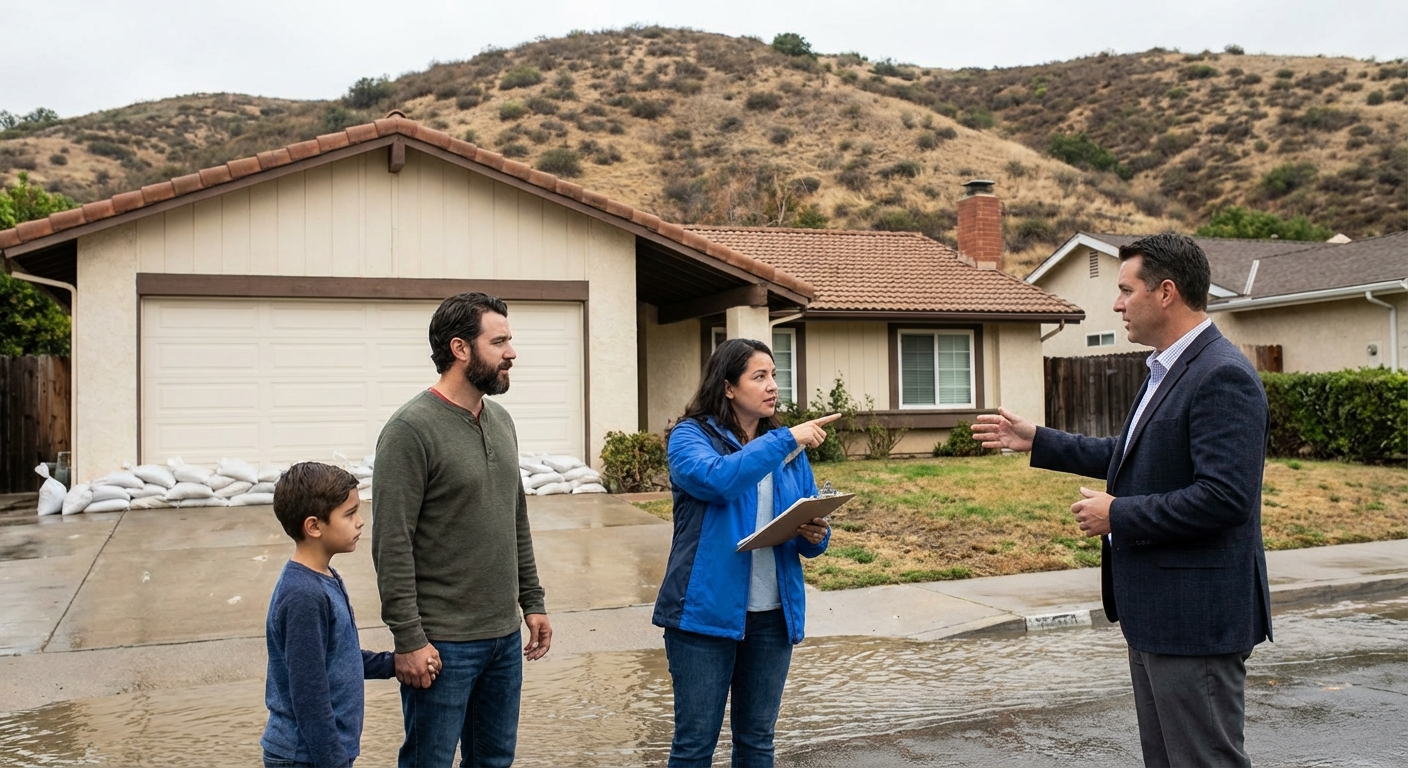
One of the first questions any agent will ask is about your flood zone. FEMA creates flood maps that classify areas into different risk zones. You’ve probably heard of Zone A (high risk, often mandatory flood insurance if you have a federally backed mortgage) or Zone X (low-to-moderate risk). Finding your zone is easy: just plug your address into FEMA’s flood map service center online.
Now, here’s a common misconception: “I’m in a Zone X, so I don’t need flood insurance.” Honestly, that’s a dangerous assumption. While it’s true that flood insurance isn’t federally required in low-to-moderate risk zones, a significant percentage of flood claims – about 25% – actually come from these areas. Just because it’s not “high risk” doesn’t mean it’s “no risk.” A slow-moving atmospheric river can still cause street flooding and seepage into homes in areas not traditionally considered flood-prone. So, even if your mortgage lender doesn’t demand it, getting flood coverage is often a smart move.
Step 5: What Determines Your Flood Insurance Cost?
So, what’s going to make your premium go up or down? Several factors play a role:
- Your Flood Zone: Unsurprisingly, living in a high-risk zone (like Zone A or V) usually means higher premiums.
- Your Home’s Elevation: How high is your lowest floor compared to the base flood elevation? Higher is better, and can mean lower costs.
- Your Deductible: Just like with home insurance, choosing a higher deductible means you’ll pay more out-of-pocket if there’s a claim, but your annual premium will be lower.
- Coverage Limits: More coverage (higher amounts for your building and contents) means a higher premium.
- Home’s Age and Foundation Type: Older homes or those with basements can sometimes face higher rates due to increased susceptibility to flood damage.
Which brings up something most people miss: The NFIP recently rolled out a new pricing methodology called Risk Rating 2.0 – “Equity in Action.” This changed how NFIP premiums are calculated, moving from a broad flood zone approach to a more specific, property-by-property risk assessment. What did that mean for Californians? Some homeowners saw their NFIP premiums jump 40% between 2022 and 2024, while others saw modest decreases. It’s a big shift, and it’s why getting a fresh quote is always a good idea.
Step 6: What Does Flood Insurance Actually Cover?
Understanding what’s covered is key to avoiding surprises later. Flood insurance generally splits into two main categories:
Building Coverage
This protects the physical structure of your home and its essential systems. We’re talking about the foundation, walls, roof, and attached garage. It also typically covers things like your furnace, water heater, central air conditioning, plumbing, electrical system, permanently installed carpeting, built-in appliances (like refrigerators and stoves), and even attached decks and staircases. Essentially, anything that’s a permanent part of the house.
Contents Coverage
This protects your personal belongings. Think clothes, furniture, electronics, artwork, and other valuables. You usually choose a separate amount for contents coverage. But here’s an important distinction: contents coverage is often for the actual cash value (ACV) of your items, meaning depreciation is factored in, not necessarily the cost to replace them new.
What’s not covered? Landscaping (trees, shrubs, pools), vehicles (those need separate auto insurance), currency, precious metals, and often items in basements (like finished walls or personal belongings that aren’t essential utilities). Remember that 30-day waiting period, too. You can’t buy a policy when the storm is already on its way and expect it to cover the damage.
Step 7: How to Get a Quote and What to Ask
Getting a flood insurance quote isn’t like buying a pair of shoes online. It’s best done with a knowledgeable insurance agent who understands California’s unique risks and the nuances of both NFIP and private policies. They can help you compare options, explain the fine print, and make sure you’re getting the right amount of coverage.
When you talk to an agent, be ready to provide your address, the year your home was built, and any elevation certificates you might have (if your home was built in a flood zone). Ask them:
- “Should I consider NFIP or a private flood policy, and why?”
- “What are the different deductible options, and how do they impact my premium?”
- “What are the actual cash value vs. replacement cost options for contents?”
- “Are there any specific exclusions I should know about for my property?”
- “What’s the waiting period for this policy to go into effect?”
An experienced agent like Karl Susman at Los Angeles Home Insurance Agency (CA License #OB75129, phone (877) 411-5200) can walk you through these choices. They’ll help you understand your options without the jargon.
If you’re ready to explore your options, get a personalized flood insurance quote today.
Step 8: Staying Prepared Beyond the Policy
While insurance is a financial safety net, taking steps to mitigate flood damage is just as important. Simple things can make a big difference. Consider installing flood vents in your foundation, especially if you have a crawl space. Elevating your furnace, water heater, and electrical panel above the base flood elevation can save you thousands in repairs. A sump pump can be a lifesaver for basements. Also, create a detailed home inventory, complete with photos or videos of your belongings. If the worst happens, this makes filing a claim much smoother.
Step 9: The Future of Flood Insurance in California
The conversation around flood insurance in California isn’t static. Climate change means we’re likely to see more intense rainfall events and continued coastal concerns. This puts pressure on both the NFIP and the private market. Insurers are constantly re-evaluating their risk models, and what’s available today might evolve tomorrow. The takeaway? Don’t assume your risk is fixed, or that your current policy will always be the best fit. Regularly reviewing your coverage is just good practice.
Don’t wait for the next storm. Protect your home and peace of mind. Get a flood insurance quote now.
Frequently Asked Questions About California Flood Insurance
Is flood insurance mandatory in California?
It’s not mandatory for every homeowner. However, if your home is located in a high-risk flood zone (Zone A or V on FEMA maps) and you have a mortgage from a federally regulated or insured lender, then yes, flood insurance is usually required.
What’s the main difference between NFIP and private flood insurance?
The NFIP (National Flood Insurance Program) is a government-backed program, administered by FEMA, that provides a baseline of coverage. Private flood insurance policies are offered directly by private insurance companies and can often provide higher coverage limits, broader terms, and sometimes more flexible pricing, especially for properties outside the highest-risk zones.
Does my regular home insurance cover mudslides?
Generally, no. Standard home insurance policies typically exclude damage caused by “earth movement,” which includes mudslides, unless it’s directly caused by an insured peril, like a fire. If the mudslide is a direct result of flooding, then a flood insurance policy would likely be needed. It’s a tricky area, and often requires specific flood or sometimes even specialized “earth movement” coverage.
How long does it take for flood insurance to go into effect?
For most NFIP policies, there’s a 30-day waiting period from the date of purchase before the coverage becomes effective. Some private flood insurance policies might offer shorter waiting periods, but it’s important to confirm this with your agent.
This article is for informational purposes only and does not constitute financial advice.