“My Home Isn’t in a ‘Fire Zone’ — Am I Safe?”
Many people living in California think of “fire zones” as those places deep in the forest, up in the mountains, or right against wildlands. They imagine a clear line on a map, separating the danger from their suburban street. The short answer is yes, you might be safe. The real answer is more complicated.
Honestly, fires don’t respect those neat lines on a map. A home can be miles from a national forest and still be at high risk. Think about how the Santa Ana winds can push embers for miles, turning a small brush fire into a fast-moving inferno that jumps freeways and ignites neighborhoods in places like Ventura County or the Inland Empire. It’s not just about being *in* the forest; it’s about being *near* anything that can burn, and how those fires spread.
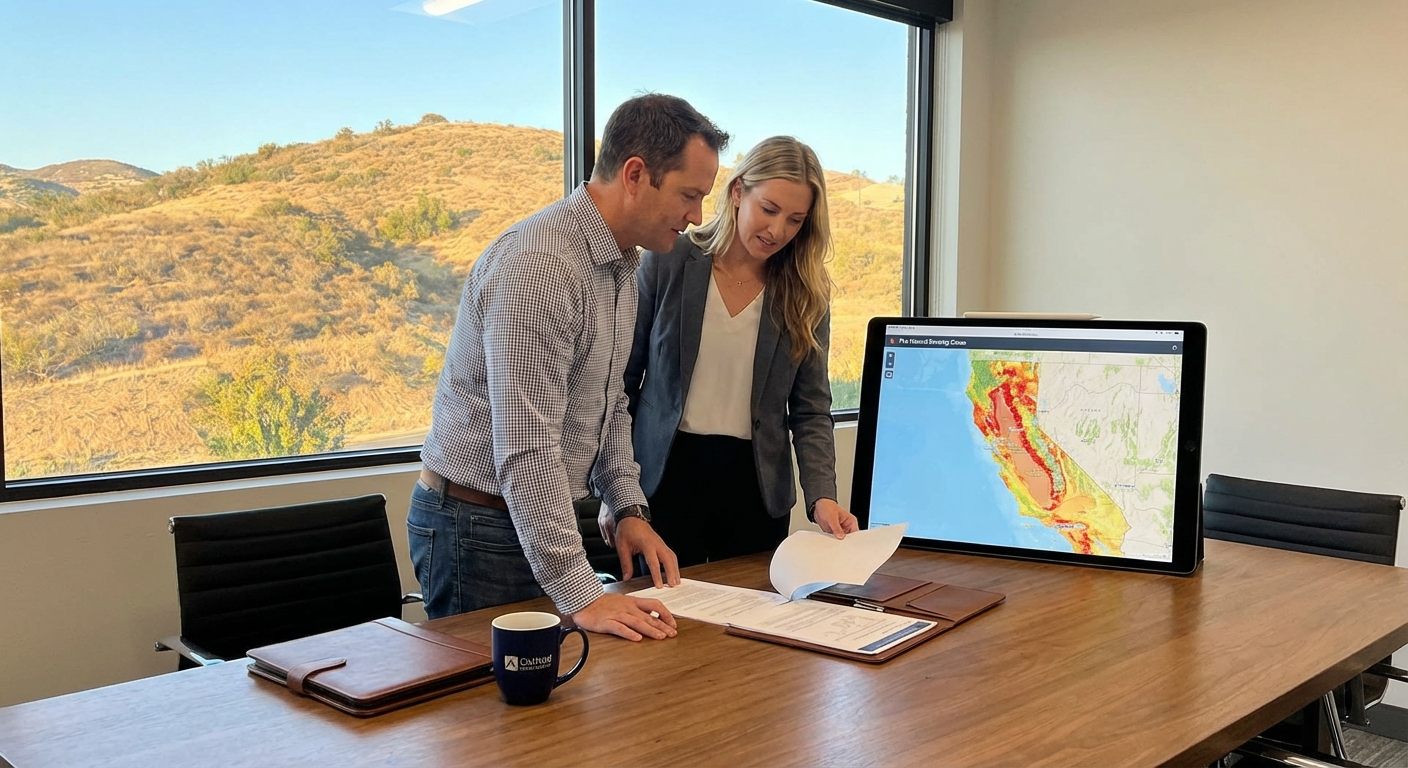
Which brings up something most people miss: The “Wildland-Urban Interface” or WUI. This isn’t just a fancy term; it’s the area where homes and development meet wildland fuels. Most of California is a WUI, whether you realize it or not. Even a seemingly safe neighborhood can have a canyon, a greenbelt, or just enough dry grass to become part of the WUI. Insurers look at this very closely, much more closely than your average homeowner might. They use complex mapping software, satellite imagery, and even AI to assess risk down to individual properties. A home on one side of the street might be deemed high-risk, while the one across the way is slightly less so, all because of vegetation, slope, or even roof type.
My Insurer Dropped Me! What Happened to Loyalty?
For years, you paid your premiums, maybe never even filed a claim. You probably felt pretty good about your insurer, maybe even a little proud of that long-standing relationship. Then, out of the blue, you got *that* letter. Your policy won’t be renewed. It’s a gut punch. Many people think that loyalty should count for something, that a good customer should be protected.
Here’s the truth: Insurers are businesses, pure and simple. They exist to make a profit. When the cost of paying out claims in a specific area consistently outweighs the money they collect in premiums, they have a problem. California has seen some truly devastating fire seasons in recent years — think of the Camp Fire, the Woolsey Fire, the North Bay fires. Billions upon billions of dollars in losses. For companies like State Farm, Allstate, and Farmers, the math just stopped working in many parts of the state.
They didn’t suddenly decide to be mean. They looked at their balance sheets, projected future risks (which, let’s be honest, aren’t looking great with climate change), and made a business decision. They’re not just pulling out of “fire zones,” either. They’re non-renewing policies in areas they deem too risky, or simply not writing *new* policies anywhere in the state, even in places like the Valley where direct fire risk might seem lower but overall portfolio risk is too high. It’s a tough situation, and it leaves homeowners scrambling.
So, What’s the Deal with the FAIR Plan?
When your traditional insurer drops you, the California FAIR Plan often gets mentioned as the backup. Many people think it’s just another insurance company, maybe a state-run one, that will pick up where the others left off. Not always.
The FAIR Plan isn’t really an insurance company in the traditional sense. It’s an “insurer of last resort.” Its main job is to provide basic fire coverage to homeowners who can’t get it anywhere else. That’s it. It covers fire, lightning, internal explosion, and smoke. Big difference. It won’t cover things like liability if someone gets hurt on your property, theft, water damage from a burst pipe, or even wind damage.
To fill those gaps, you absolutely need a second policy, usually called a “Difference in Conditions” or DIC policy. This DIC policy covers everything the FAIR Plan doesn’t. You end up with two separate policies, two separate bills, and often a much higher overall cost than you ever paid before. In fact, the FAIR Plan has seen its policy count explode, jumping to over 330,000 policies by early 2024. They’ve had to increase their coverage limits, but those increases come with higher premiums, too. It’s a safety net, yes, but it’s a complicated, often expensive one.
Is There Anything I Can Do to Get Better Rates or Coverage?
Feeling helpless? Like you’re just a victim of circumstance? That’s a common feeling right now. Many people think insurance is something that just *happens* to them, a bill that arrives in the mail. But here’s the thing: You actually have some power, especially when it comes to fire risk.
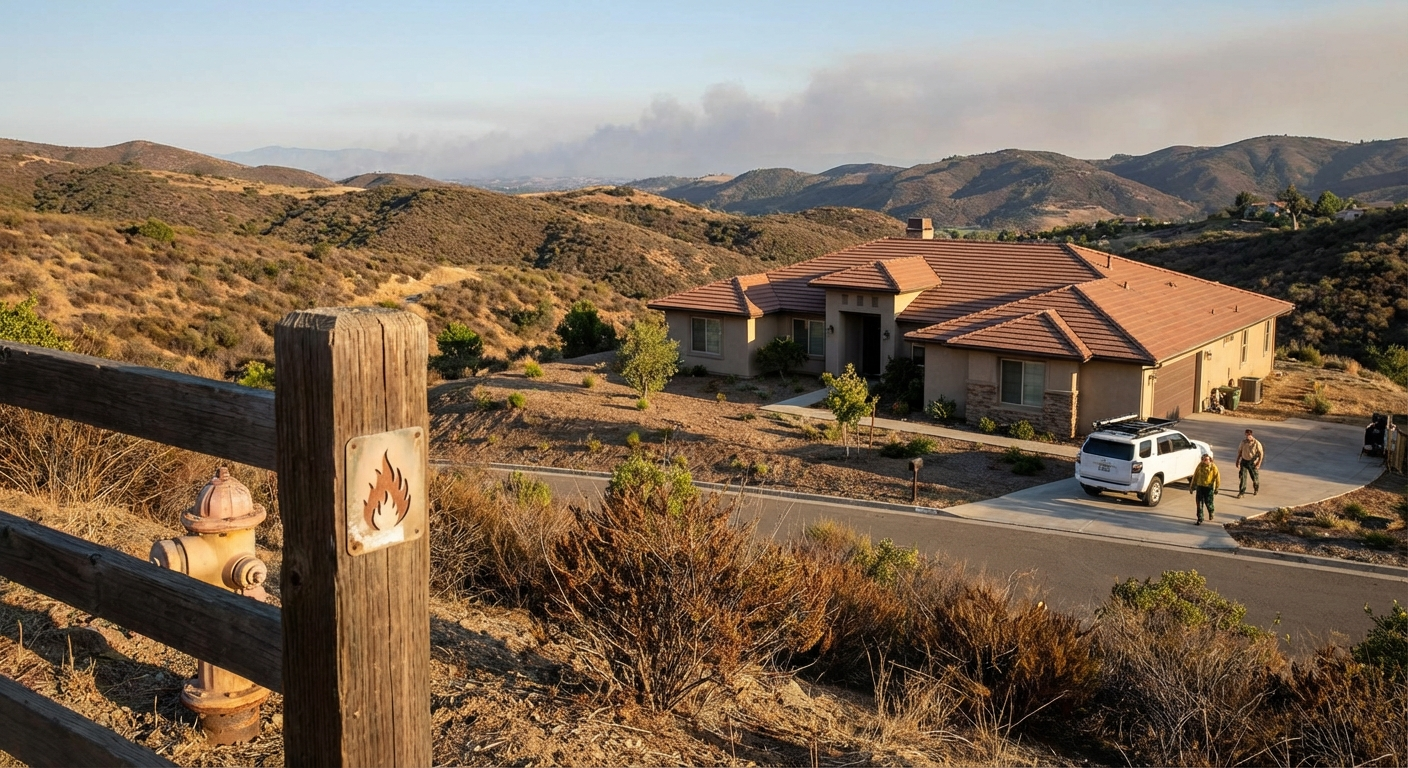
California homeowners who take proactive steps to reduce their fire risk can sometimes find better options, or at least help themselves when things get tough. We’re talking about “defensible space” and “home hardening.” Defensible space means creating a buffer around your home by clearing brush, trimming trees, and removing flammable materials out to at least 100 feet. It gives firefighters a chance to save your home.
Home hardening involves making your actual house more resistant to embers and flames. This means things like installing ember-resistant vents, using fire-resistant roofing materials, dual-pane windows, and screening under eaves. The California Department of Insurance (CDI) is actually pushing insurers to offer discounts for these kinds of mitigation efforts. It’s a slow process, but some carriers *are* starting to recognize the value. It won’t guarantee you a policy from State Farm, but it might open doors to other insurers or at least lower your FAIR Plan premiums.
Why Can’t the State Just Force Insurers to Stay?
California has some of the strongest insurance regulations in the country, largely thanks to Proposition 103, passed way back in 1988. It requires insurers to get approval from the CDI before changing rates. Many people think this means the state can just tell insurers what to do.
But wait — it’s a balancing act. Prop 103 protects consumers from arbitrary rate hikes, but it can also tie insurers’ hands. They argue that the approval process is too slow and doesn’t allow them to raise rates fast enough to keep up with the actual, rapidly increasing cost of covering fire claims. If they can’t charge what they believe is a fair rate for the risk, they’ll simply stop offering policies. That’s why you see major players pulling back. The CDI is working on new regulations that would allow insurers to factor in future risks (like climate change projections) and reinsurance costs more easily, which *might* entice some back into the market. It’s a high-stakes negotiation, with your home’s coverage hanging in the balance.
Do I Really Need an Insurance Agent Anymore?
In the age of online quotes and direct-to-consumer insurance companies, some folks might wonder if an insurance agent is still necessary. You can click a few buttons, answer some questions, and get a quote, right? For simple, low-risk situations, maybe. But in today’s California market, especially in or near fire zones, trying to go it alone can be a huge mistake.
An independent agent isn’t tied to one company. They work for *you*. They have access to dozens of different insurers, including smaller, specialty carriers that you’d never find online by yourself. They understand the nuances of the California market, the specific requirements of the FAIR Plan, and how to piece together coverage from different sources. When State Farm or AAA says no, an experienced agent might know three other companies who will say yes.
Karl Susman, from Los Angeles Home Insurance Agency (CA License #OB75129), has been helping Californians navigate this kind of chaos for years. He and his team understand the specific challenges of finding coverage in places like the Hollywood Hills, Malibu, or even closer to the Angeles National Forest. They know which carriers are still writing, what kind of mitigation efforts those carriers reward, and how to get you the best possible coverage, even if it means combining policies.
If you’re feeling lost, don’t just guess. Reach out to a professional. You can start the conversation and get a quote right here: Get Your Home Insurance Quote.
What Happens Next? Is This the ‘New Normal’?
It’s tempting to think that this insurance crisis is just a blip, that things will eventually calm down and go back to how they were a decade ago. But honestly, that’s probably not going to happen. The combination of climate change, continued development in high-risk areas, and the sheer cost of rebuilding after massive wildfires means we’re likely in a “new normal.”
The conversations between the CDI, insurers, and lawmakers are ongoing. There’s a push for more community-wide mitigation efforts, not just individual homeowners. There’s talk of creating new funds, new ways to assess risk, and new incentives for insurers to stay in California. But these are massive, complex problems without quick fixes. The risk of major fires, like the hypothetical 2025 LA fires we all dread, remains ever-present.
For homeowners, this means staying informed, being proactive about protecting your property, and understanding that finding the right insurance might take more effort than it used to. It’s not just about protecting your biggest asset; it’s about protecting your peace of mind.
Don’t wait for the next fire season to wonder if you’re covered. Understand your options now. Get a personalized quote: Start Your Quote Today.
Frequently Asked Questions
What’s the Wildland-Urban Interface (WUI)?
The WUI is any area where human development meets or intermingles with wildland vegetation or combustible fuels. It’s not just deep forests; it can be suburban neighborhoods bordering canyons, hillsides, or even large parks with dry brush. Insurers use this designation to assess fire risk.
Can I be dropped even if I’ve never filed a claim?
Yes, absolutely. Insurers often make decisions based on the overall risk of an area, not just your individual claims history. If the company decides a specific ZIP code or even a particular block is too risky to insure profitably, they might non-renew policies there regardless of how good a customer you’ve been.
Does “defensible space” actually lower my premium?
It can. While it doesn’t guarantee a specific discount from every insurer, creating and maintaining defensible space and hardening your home makes your property a lower risk. Some carriers, especially smaller specialty ones, are starting to offer discounts for these efforts. It also significantly increases the chances of your home surviving a wildfire, which is the ultimate goal.
What’s a DIC policy?
DIC stands for “Difference in Conditions.” If you have to get your basic fire coverage through the California FAIR Plan, a DIC policy is a second, separate policy you buy to cover all the things the FAIR Plan doesn’t. This includes liability, theft, water damage, wind damage, and many other common perils that a standard homeowners policy would cover.
This article is for informational purposes only and does not constitute financial advice.