The Shifting Ground Beneath Your California Home
For many California homeowners, the thought of foundation damage is a quiet, persistent worry. It’s not hard to see why. We live in a state known for its dramatic landscapes — and sometimes, its dramatic geological activity. A home’s foundation is its very backbone. When it starts to crack, sink, or shift, the problems can quickly spread, threatening the entire structure. And the repair bills? They can be eye-watering.
So, what happens when the ground beneath your dream home starts to tell a different story? More importantly, does your home insurance policy step in to help? The short answer is sometimes. The real answer is far more complicated, especially here in California.
Why California Foundations Are So Vulnerable
Our golden state is beautiful, but it’s also a geological hotbed. Several factors conspire to make foundation issues a common headache for Californians:
* **Expansive Clay Soils:** From the Central Valley to parts of the Inland Empire, we have vast areas of clay soil. This stuff is tricky. It swells dramatically when wet and shrinks when dry. This constant expansion and contraction puts immense stress on foundations, leading to cracks and uneven settling over time.
* **Seismic Activity:** Earthquakes, big and small, are a fact of life. While a major quake can cause immediate, visible damage, even smaller, frequent tremors can contribute to gradual wear and tear on a foundation.
* **Water, Water Everywhere (and Not):** California swings between drought and heavy rain. Poor drainage around a home, leaking pipes, or even an improperly placed sprinkler can saturate the soil, causing it to heave or erode. During dry spells, the soil dries out and shrinks, pulling away from the foundation. It’s a double-edged sword.
* **Aging Infrastructure:** Many homes in older neighborhoods — think parts of Los Angeles or the Bay Area built in the 50s and 60s — sit on original foundations that weren’t designed for today’s building codes or the stresses they’ve endured for decades.

Does Your Home Insurance Policy Cover Foundation Damage? It’s All About the Cause.
This is where things get tricky. Standard home insurance policies in California don’t simply cover “foundation damage.” They cover *perils* – specific events that cause damage. Whether your foundation repair is covered hinges entirely on *what caused* the damage.
If the damage is sudden and accidental, caused by a covered peril, you might be in luck. Think a burst pipe under your slab that suddenly washes away soil, or a fire that compromises the structural integrity.
But here’s the thing. Most foundation problems are *not* sudden and accidental. They develop slowly, over time, due to things like soil movement, settling, or poor maintenance. And that’s usually where standard policies draw a hard line.
The “Covered Perils” vs. “Excluded Perils” Dance
Let’s break down what’s typically in and what’s out:
What Might Be Covered (If Sudden and Accidental)
* **Burst Pipes:** Say a water pipe bursts under your home, eroding the soil and causing a section of your foundation to sink. That sudden water damage, and the resulting foundation issue, could be covered.
* **Fire Damage:** If a fire damages your home’s structure, including the foundation, that’s usually covered.
* **Falling Objects:** A tree falling on your house and damaging the foundation? Likely covered.
* **Vehicle Impact:** A car crashing into your home’s foundation? Yes, that’s usually covered.
What’s Usually Excluded (The Hard Truth)
* **Earthquakes:** This is a big one in California. Standard home insurance policies *do not* cover earthquake damage. For that, you need a separate earthquake policy, often purchased through the California Earthquake Authority (CEA) or a private insurer. Without it, you’re on your own if a quake cracks your foundation.
* **Floods:** River overflows, storm surges, or even heavy rain pooling in your yard and seeping into your foundation over time? Not covered by standard home insurance. You need a separate flood insurance policy, typically through the National Flood Insurance Program (NFIP).
* **Landslides and Mudslides:** These are often excluded, especially if they’re a result of earth movement. Some policies might offer limited coverage if the landslide was *directly caused* by a covered peril, like a sudden burst pipe. It’s a very narrow window.
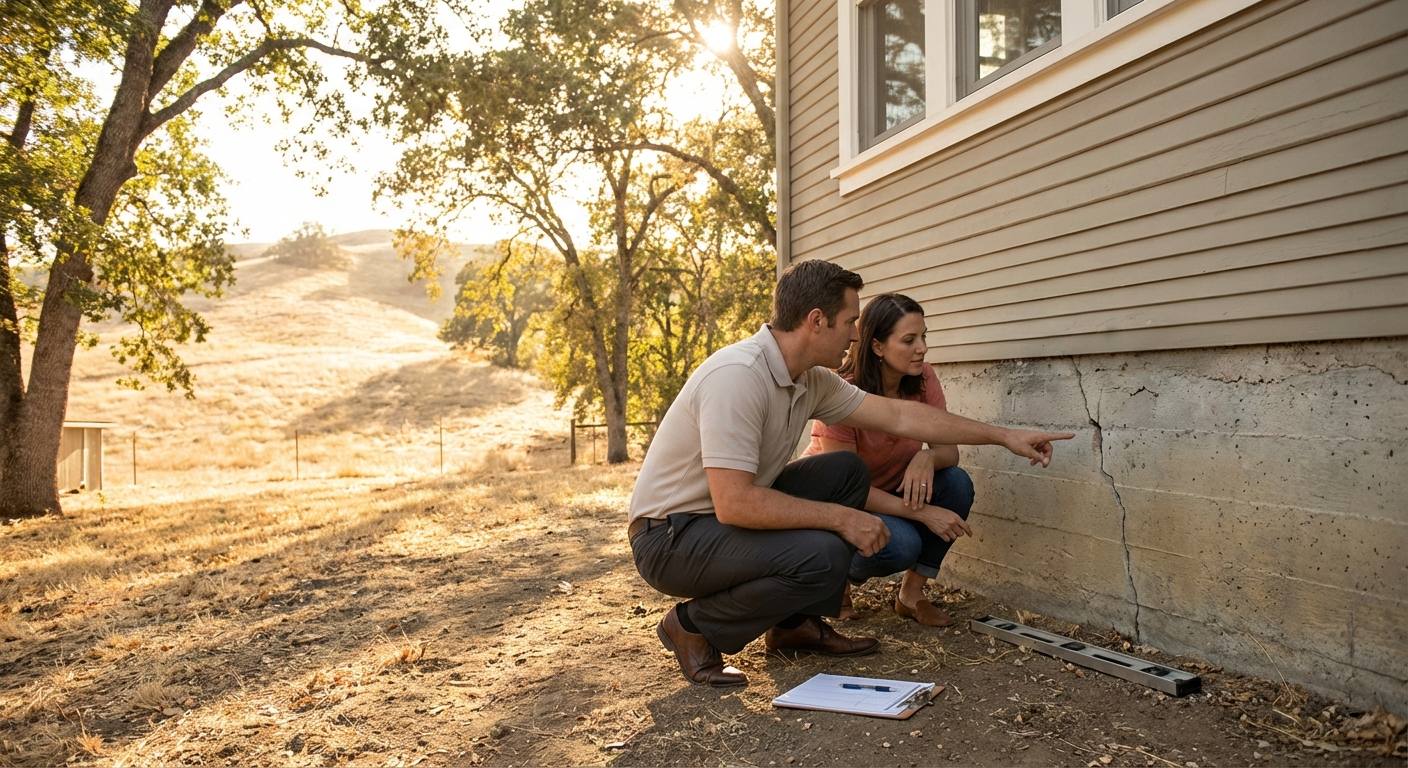
* **Settling, Shifting, Expanding Soil:** This is the most common cause of foundation issues in California, and it’s almost always excluded. Insurers consider this a natural process, or a maintenance issue. If your foundation cracks because the expansive clay soil under your Ventura County home swelled and shrunk over years, your standard policy won’t pay for the fix.
* **Poor Maintenance:** Think long-term leaks from gutters, improper drainage around the house, or neglecting to fix small cracks before they become big ones. Insurers expect you to maintain your property. Damage resulting from neglect is rarely covered.
* **Termites and Other Pests:** While these can certainly damage a foundation, the cost to repair the damage and eradicate the pests is typically excluded.
The Proximate Cause Rule: Why It Matters
Here’s where it gets interesting. Insurance companies look for the “proximate cause” – the first event in an unbroken chain of events that leads to the damage.
Let’s say a sudden, accidental pipe burst under your house (a covered peril). That burst pipe causes the soil to erode, which then leads to your foundation cracking and settling. In this scenario, the *proximate cause* is the burst pipe, a covered peril, so the foundation damage would likely be covered.
But what if your foundation cracks due to long-term soil expansion (an excluded peril), and *that* crack then causes a pipe to burst? Now the proximate cause is the excluded soil movement, and the pipe burst, and subsequent water damage, might not be covered. Big difference.
Earthquakes: A Separate Conversation Entirely
Living in California means living with seismic activity. From the San Fernando Valley to the coast, we’re all aware of the fault lines. If your foundation damage is due to an earthquake, your standard homeowner’s policy offers zero protection.
You need an earthquake policy. The California Earthquake Authority (CEA) is the largest provider, but private options exist too. These policies come with their own deductibles — often a percentage of your home’s dwelling coverage, like 10% or 15%. That can be a substantial amount, so it’s important to understand what you’re buying. Karl Susman at Los Angeles Home Insurance Agency, CA License #OB75129, can walk you through the specifics of earthquake coverage and help you decide if it’s right for your home.
The California Insurance Market: A Tough Climate for Homeowners
It’s no secret that getting and keeping home insurance in California has become a challenge. Major carriers like State Farm and Allstate have pulled back, limiting new policies, especially in areas prone to wildfire or other significant risks. This market instability makes it even more important to understand your policy and work with an experienced agent.
The FAIR Plan, California’s “insurer of last resort,” offers basic coverage when private insurers won’t. But it’s limited and often more expensive, and it certainly won’t offer a wide net of foundation coverage. Prop 103, while designed to protect consumers, also creates a complex regulatory environment that can affect what insurers are willing to cover and at what price.
What to Do If You Suspect Foundation Damage
Don’t wait. Those small cracks can become big problems.
1. **Document Everything:** Take photos and videos. Note dates when you first noticed issues.
2. **Contact Your Agent First:** Before calling a contractor, call your insurance agent. They can review your policy and advise you on whether filing a claim makes sense. An experienced agent, like Karl Susman at Los Angeles Home Insurance Agency, can be your best advocate. He’s seen it all and understands the nuances of California policies. You can reach him at (877) 411-5200.
3. **Get Professional Assessments:** If your agent advises it, get a structural engineer to assess the damage. Their report will be critical for any claim.
Protecting Your Investment: Beyond Insurance
While insurance is your safety net, proactive steps can help prevent foundation issues:
* **Good Drainage:** Ensure rainwater drains away from your foundation. Gutters should be clear, and downspouts should extend several feet from the house.
* **Proper Landscaping:** Avoid planting large trees or shrubs too close to the foundation. Their roots can absorb moisture, causing soil shrinkage, or even directly damage the foundation.
* **Regular Inspections:** Periodically walk around your home. Look for cracks in the foundation, uneven floors, doors that stick, or gaps around windows.
* **Address Leaks Promptly:** Fix leaky faucets, sprinklers, or underground pipes immediately.
Finding the Right Guide Through the Maze
Understanding the ins and outs of home insurance and foundation damage in California is not for the faint of heart. It requires a deep understanding of policy language, local geology, and the ever-changing insurance market.
That’s why working with a seasoned independent insurance agent is so important. Someone who lives and works here, who understands the specific challenges facing homeowners in places like Orange County or the Santa Barbara foothills. An agent like Karl Susman of Los Angeles Home Insurance Agency (CA License #OB75129) can help you sift through the options, clarify exclusions, and make sure you’re as protected as possible against the unique risks of California living.
If you’re concerned about your coverage or want to explore options for earthquake or flood insurance, don’t guess. Talk to an expert.
Get a Home Insurance Quote from Los Angeles Home Insurance Agency Today!
Frequently Asked Questions About Foundation Damage and Home Insurance
Q: Will my home insurance cover foundation repair if it’s due to normal settling over time?
A: Almost certainly not. Standard home insurance policies typically exclude damage caused by normal settling, shifting, or expansion and contraction of soil over time. These issues are generally considered maintenance-related or natural earth movement, which aren’t covered perils.
Q: Do I need a separate policy for earthquake damage to my foundation in California?
A: Yes, absolutely. Standard home insurance policies in California specifically exclude earthquake damage. To cover foundation damage from an earthquake, you’ll need a separate earthquake insurance policy, often available through the California Earthquake Authority (CEA) or private insurers.
Q: What if a plumbing leak under my house causes foundation damage? Is that covered?
A: This is one of the scenarios where foundation damage *might* be covered. If the plumbing leak is sudden and accidental – like a burst pipe – and it directly causes damage to your foundation by eroding soil or undermining the structure, then the damage could be covered under your standard policy’s water damage provisions. However, slow, long-term leaks that you neglected to fix are usually not covered.
Q: My foundation is cracking because of poor drainage around my house. Will my insurance pay for the fix?
A: Probably not. Damage resulting from poor drainage or long-term water seepage that could have been prevented through regular home maintenance is typically excluded. Insurers expect homeowners to take reasonable steps to maintain their property and prevent such issues.
Q: How can Karl Susman help me understand my foundation coverage?
A: Karl Susman at Los Angeles Home Insurance Agency (CA License #OB75129) can review your current home insurance policy in detail, explain what perils are covered and excluded, and help you understand how those apply to potential foundation damage. He can also discuss options for additional coverage like earthquake or flood insurance, ensuring you have the best possible protection for your California home.
Ready to review your coverage? Contact Los Angeles Home Insurance Agency now.
This article is for informational purposes only and does not constitute financial advice.
Karl Susman, Los Angeles Home Insurance Agency, CA License #OB75129, Phone: (877) 411-5200