The Unseen Costs Lurking Under Your California Home
Imagine this: The Millers, a young family, just bought their dream Craftsman in Pasadena. It’s got the sunny porch, the big backyard with an old avocado tree, and history etched into every plank. They spent months searching, finally found “the one,” and poured their savings into making it theirs. Moving in was a blur of boxes and happy chaos. Then, about three months later, the smell started. Not just any smell, but that unmistakable, truly awful sewer smell. It seeped up from the backyard, then started gurgling from their downstairs toilet. Panic set in.
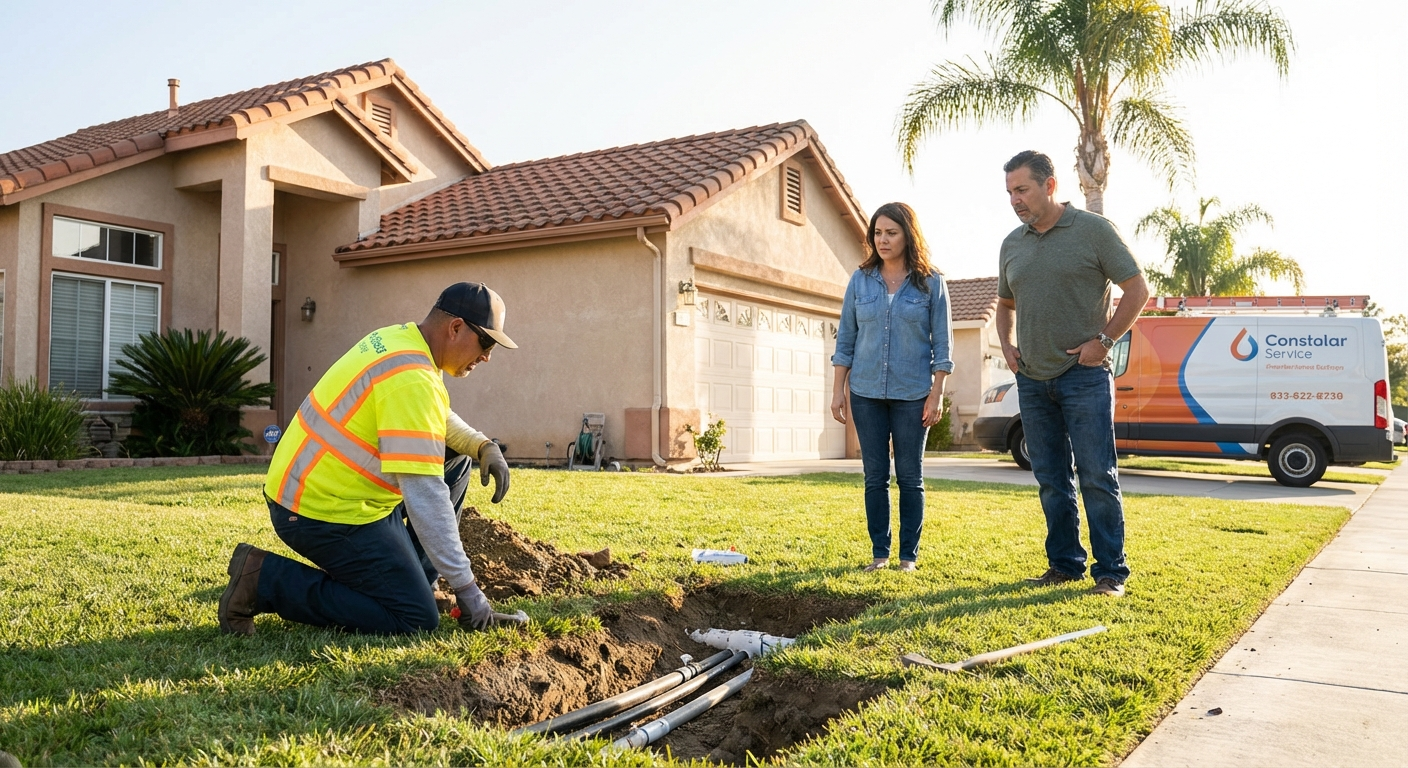
They called a plumber, figuring it was a simple clog. The plumber came, took one look, and delivered the gut punch: a massive root intrusion had crushed their main sewer line, a pipe that ran a good forty feet from their house to the city connection under the street. It wasn’t just clogged; it was destroyed. The estimate? Twenty-five thousand dollars. Digging up the yard, replacing the pipe, repairing the concrete driveway they’d just poured, replanting the landscaping.
The Millers called their home insurance company, hearts pounding. Surely, this was covered? The agent listened patiently, then delivered the second blow: “No, Mr. Miller. That’s a service line issue. Your standard policy doesn’t cover that.” Their dream home suddenly felt like a financial nightmare. This kind of story plays out across California more often than you’d think. It’s the hidden risk beneath your feet.
What Exactly is a Service Line, Anyway?
We talk a lot about roofs and walls and windows when it comes to home insurance. But what about all the stuff that makes a home actually *work*? I’m talking about the pipes and wires buried underground that bring water, electricity, natural gas, and internet to your house, and take wastewater away. These are your service lines.
For most California homeowners, you own and are responsible for these lines from your home’s foundation all the way to where they connect with the city’s main infrastructure, usually at the street or property line. That includes the water main pipe delivering fresh water, the sewer line carrying waste, the gas line, and sometimes even underground electrical or communication cables.
Older homes, like those charming Victorians in San Francisco, mid-century ranches in the Valley, or Spanish-style homes in Ventura County, often have original service lines. These pipes could be made of materials that degrade over time, like clay or cast iron. They’ve been sitting there for decades. New homes aren’t entirely off the hook either; modern pipes can still break.

Beyond the Obvious: What Can Go Wrong?
Plenty, it turns out. Tree roots are a huge culprit, especially in established neighborhoods with mature trees. Those roots are constantly seeking water, and a tiny crack in a sewer pipe looks like an oasis. They grow in, expand, and eventually crush or block the line.
Corrosion is another big one. Metal pipes simply wear out over time. Shifting earth, which we get plenty of here in earthquake country, can stress and break lines. Imagine a small tremor, or even just years of soil settling. A contractor digging in your yard for a new patio could accidentally strike a buried line. A heavy vehicle driving over your lawn could cause a collapse. These aren’t just minor leaks; these are often catastrophic failures that require serious, expensive intervention.
Your Standard Home Policy Probably Won’t Help
This is where the Millers’ story becomes a cautionary tale. Most standard homeowners’ insurance policies – think the basic HO-3 that State Farm, Farmers, or AAA might offer – are designed to cover sudden, accidental damage to your *dwelling* and its contents from specific perils like fire, wind, hail, or theft. They typically exclude damage to underground service lines.
Why? Well, insurers often view service line failures as a maintenance issue, or something that happens due to wear and tear, or ground movement – things they generally don’t cover. If a pipe bursts *inside* your wall and floods your kitchen, that’s usually covered. But if the main water line breaks *under your front lawn* before it even reaches your house, that’s a different story. The distinction is key: inside vs. outside, and what caused the break. It’s a fine line, but a big difference for your wallet.
Service Line Coverage: A Safety Net You Didn’t Know You Needed
Here’s where it gets interesting. While standard policies don’t cover service lines, you can usually add “service line coverage” as an endorsement or rider to your existing policy. Think of it like an extra layer of protection specifically for those underground connections.
What does it actually cover? Typically, it pays for the cost of repairing or replacing damaged service lines, including water, sewer, natural gas, and even some electrical or data lines. But wait – it often goes beyond just the pipe itself. This coverage can also pay for the *digging* (excavation costs, which can be huge), the *backfilling*, and the cost to *restore your yard* – replacing landscaping, driveways, or sidewalks that had to be torn up for the repair. Some policies might even cover things like expediting the repair or additional living expenses if your home becomes uninhabitable during the fix.
The limits for this coverage usually range from $10,000 to $20,000, sometimes more, depending on your insurer and what you choose. That might sound like a lot, but as the Millers found out, a single major repair can easily hit that mark, especially in high-cost areas of California.
Is It Expensive? What’s the Catch?
Honestly, for what you get, service line coverage is usually quite affordable. We’re not talking about a massive jump in your annual premium. Often, it’s just an extra $30 to $100 a year. Compared to a $15,000 or $25,000 repair bill, that’s a drop in the bucket.
The “catch,” if you can even call it that, is that it’s often overlooked. Most people don’t think about it until it’s too late. It’s an “out of sight, out of mind” kind of thing. But when a problem strikes, you’ll be incredibly glad you spent that small extra amount.
Why California Homeowners Should Pay Attention
This coverage isn’t just a good idea; for many in California, it’s almost essential. Our state has a unique blend of factors that make service line issues more common:
* **Aging Infrastructure:** Go almost anywhere in Los Angeles, San Diego, or up through the Bay Area, and you’ll find homes built decades ago. Their original pipes are simply reaching the end of their lifespan.
* **Active Geology:** We live on shaky ground. Small tremors, larger earthquakes, even just regular soil expansion and contraction with our varied weather, can stress underground lines.
* **Lush Landscaping:** Many of our beautiful, established neighborhoods have massive trees. Those roots are a constant threat to buried pipes. Think about the giant sycamores in the Valley or the oaks in the Inland Empire.
* **Drought Cycles:** Extended periods of drought followed by heavy rains can cause significant soil movement, putting extra strain on underground pipes.
* **Wildfire Aftermath:** While not directly damaging service lines, wildfires can weaken soil structure. Subsequent rains can lead to erosion and mudslides, shifting the ground and potentially damaging lines.
Many reputable insurers operating in California, from the larger players like Farmers and Travelers to smaller, regional carriers, offer this as an add-on. It’s not some obscure, hard-to-find policy. It’s just often not automatically included.
Finding the Right Fit: Talk to a Pro
Trying to figure out all the ins and outs of home insurance can feel like a maze. That’s why talking to an independent insurance agent, someone who works for *you* and not just one company, is so helpful. They can look at your specific home – its age, location, and unique risks – and then shop around with multiple carriers to find the best policy and endorsements for you.
Someone like Karl Susman, with Los Angeles Home Insurance Agency, CA License #OB75129, has seen it all. He understands the unique challenges California homeowners face, from brush fire risks to unexpected underground pipe issues. He can walk you through the options, explain the fine print, and help you decide if service line coverage is a smart move for your specific situation.
Ready to see if service line coverage makes sense for your CA home? Get a quick, no-obligation quote today.
https://losangeleshomeinsuranceagency.com/quote/
Don’t Let an Underground Problem Bury Your Budget
The Millers eventually got their sewer line fixed, but that $25,000 bill was a hard lesson. They had to tap into their emergency savings, delaying other plans. If they’d had service line coverage, that massive unexpected expense could have been largely absorbed by their insurance, leaving their savings intact.
It’s easy to focus on the big, visible threats to your home – fires, burglaries, storms. But sometimes, the biggest financial threats are the ones you can’t see, literally buried just a few feet under your lawn. A small annual premium for service line coverage can offer immense peace of mind and protect you from a potentially devastating financial hit. Don’t let an unseen issue become an unmanageable one.
Protect your home’s unseen infrastructure. Contact Karl Susman and the Los Angeles Home Insurance Agency at (877) 411-5200, or start your online quote.
https://losangeleshomeinsuranceagency.com/quote/
Frequently Asked Questions About Service Line Coverage
What exactly is covered by service line insurance?
Typically, it covers damage to underground service lines that run from your property line to your home, including water, sewer, gas, and electrical lines. This often includes the cost of repair or replacement, excavation, and restoration of your landscaping, driveway, or sidewalk that was disturbed during the repair.
Is service line coverage included in a standard California home insurance policy?
No, it’s almost always an optional add-on or endorsement. Most basic homeowners policies exclude damage to underground service lines, considering them a maintenance issue or something not directly related to the structure itself.
How much does service line coverage usually cost?
It’s generally quite affordable, often adding only $30 to $100 per year to your annual premium. The exact cost depends on your insurer, your location in California, and the specific coverage limits you choose.
What kind of damage does service line coverage protect against?
It covers a range of problems, including tree root invasion, corrosion, freezing, wear and tear, collapse, and accidental damage from digging. It’s designed to cover sudden and accidental damage to these lines.
Why is this coverage particularly important for California homeowners?
California’s aging infrastructure, active seismic activity, extensive tree root systems in established neighborhoods, and varying soil conditions (due to drought and rain cycles) all increase the risk of service line failures. This makes the coverage a wise investment for many homes across the state.
This article is for informational purposes only and does not constitute financial advice.