What You’ll Learn
- Why California home insurance is so challenging right now.
- How new regulations are forcing insurers to offer wildfire mitigation discounts.
- The exact steps you can take to harden your home against fire.
- What “defensible space” really means and how to create it.
- How to document your efforts to qualify for discounts.
- Why working with an independent agent like Karl Susman is more important than ever.
California Home Insurance: A Tough Road, But There’s a Path Forward
Honestly, it’s a rough time for California homeowners trying to get or keep insurance. Maybe you’ve seen your premiums jump 30%, 40%, even 50% between 2022 and 2024. Perhaps you’ve gotten that dreaded non-renewal letter from a company like State Farm or Farmers, leaving you scrambling. It’s not just a feeling; the numbers tell a stark story. Insurers paid out nearly $26 billion in wildfire claims in California from 2017 to 2021, according to the California Department of Insurance (CDI). That’s a huge sum, and it’s changed how every company looks at our state.
But here’s the thing. While the problem feels massive, homeowners aren’t powerless. Not entirely. The state’s insurance commissioner, Ricardo Lara, has pushed through some big changes. One of the most significant? Insurers are now *required* to offer discounts for homes that meet specific wildfire mitigation standards. This isn’t just a nice-to-have anymore; it’s a mandate. And for you, it’s a real chance to bring those premiums down, or at least make your home more attractive to an insurer.
This isn’t about magical fixes. It’s about practical, actionable steps. It’s about making your property less likely to ignite and more likely to survive when a fire inevitably comes roaring through. Think of it as investing in your home’s future, and getting a discount on your insurance is a pretty sweet return.

Step 1: Understand the “Why” – Why Mitigation Matters More Than Ever
For years, many insurers simply looked at your address, plugged it into a model, and out popped a premium. If you lived in a high-risk area – say, the hills of Ventura County or parts of the Inland Empire bordering wildlands – your rates were high, or you were outright denied. The logic was simple: high risk, high cost.
But that’s not the whole story. What those old models often missed was how *individual* homes within a high-risk zone could be made safer. A house with a brand-new fire-resistant roof and meticulously cleared defensible space is a very different risk than its next-door neighbor with old wooden siding and overgrown brush. The Camp Fire in Paradise showed us this clearly: some homes survived almost untouched while others around them were completely destroyed. The difference often came down to mitigation efforts.
The CDI recognized this gap. Under Prop 103, which gives the commissioner power to approve insurance rates, they’ve pushed for a new approach. They want insurers to reward homeowners for taking proactive steps. It’s a shift from just assessing risk to actively incentivizing risk reduction. This means your efforts aren’t just for peace of mind; they’re for your wallet too.
Step 2: Get Familiar with the “Safer from Wildfires” Framework
This is the big one. The “Safer from Wildfires” framework is a set of statewide standards developed by the CDI, CAL FIRE, and the Governor’s Office of Emergency Services (CalOES). It outlines the specific actions homeowners can take to reduce their wildfire risk. And here’s the key: insurers *must* consider these actions when setting rates and offering discounts.
This framework breaks down mitigation into two main categories:
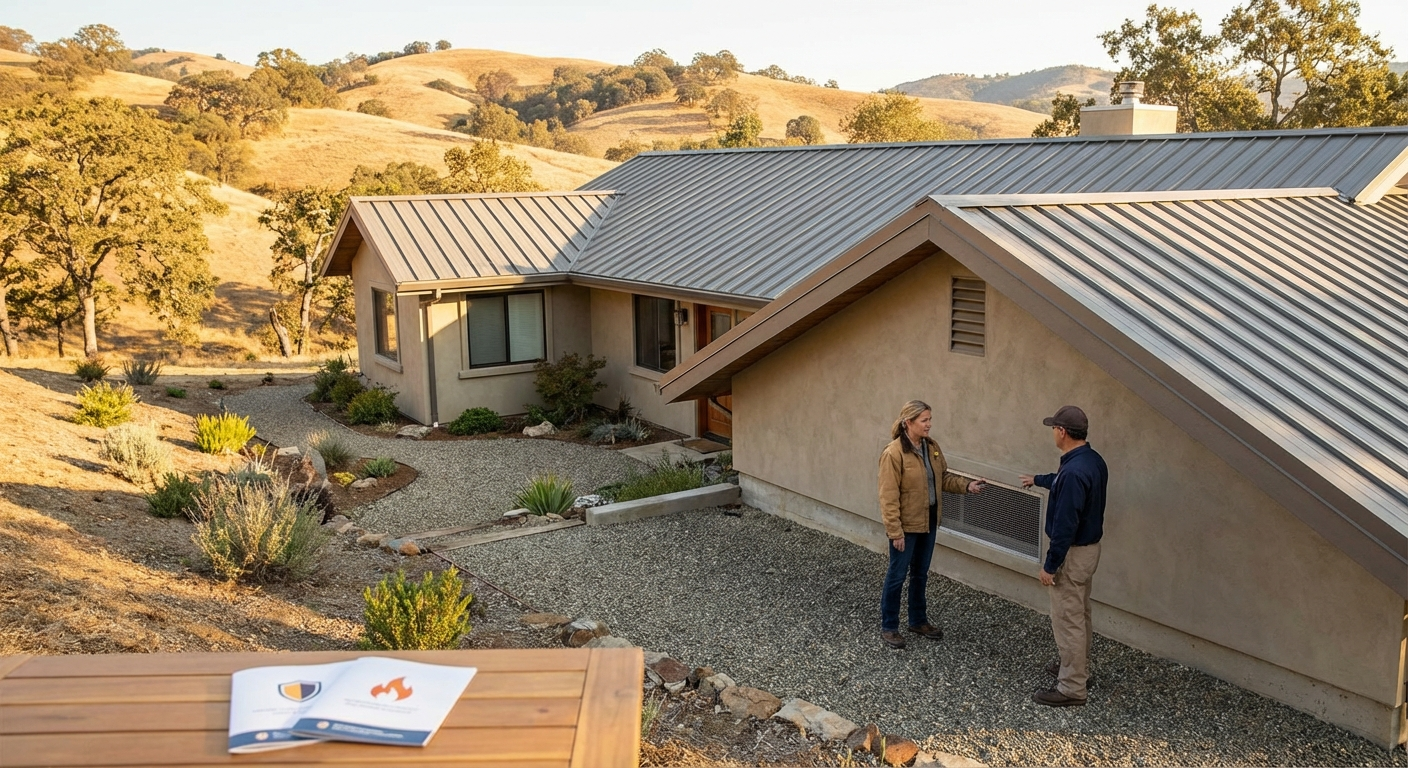
Hardening Your Home: Making the Structure Resilient
This is about the house itself – its materials and construction. Think of it as putting on armor.
* Roofs: Your roof is often the most vulnerable part of your home. Embers can travel miles ahead of a fire, landing on your roof and igniting it. The best roofs are Class A fire-rated materials like asphalt composition shingles, metal, or tile. If you have an old wood shake roof, that’s a major red flag for insurers.
* Vents: Those small openings in your attic and foundation? They’re entry points for embers. Upgrading to fine mesh (1/8-inch or smaller) or baffle-style vents can make a massive difference.
* Eaves and Soffits: Open eaves can trap embers. Enclosing them with fire-resistant materials helps prevent this.
* Windows: Dual-paned or tempered glass windows are more resistant to heat and breaking than single-paned ones. Screens on windows can also block embers.
* Siding: Non-combustible siding materials like stucco, fiber cement, or treated wood are far better than untreated wood or vinyl, which can melt.
* Decks and Fences: Wooden decks and fences attached to your home can act as a wick, bringing fire right to your structure. Consider replacing wooden deck boards with fire-resistant alternatives or creating a non-combustible zone under and around your deck. Move that wood fence away from the house if you can.
Defensible Space: Creating a Buffer Zone Around Your Property
This is about managing the vegetation and anything else around your home that could ignite. CAL FIRE has long championed defensible space, and now it’s directly tied to your insurance. It’s typically broken into three zones:
* Zone 0 (Ember-Resistant Zone, 0-5 feet from your home): This is the most critical area. It needs to be completely free of anything combustible. No plants, no mulch, no woodpiles, no patio furniture made of flammable materials. Think concrete, gravel, or pavers. This zone stops embers from igniting right at your foundation.
* Zone 1 (Lean, Clean, and Green, 0-30 feet from your home): Keep this area clear of dead plants, leaves, and needles. Trim branches to at least 10 feet from other trees and structures. Space out plants so fire can’t easily jump from one to another.
* Zone 2 (Reduced Fuel Zone, 30-100 feet or to property line): Here, you’re reducing the amount of flammable vegetation. Remove dead trees, thin out dense stands of shrubs, and keep grass mowed short. The goal isn’t to clear-cut, but to break up continuous fuel sources.
Honestly, getting your defensible space in order is often the quickest, most affordable way to start. You don’t need a contractor for much of it.
Step 3: Document Your Mitigation Efforts – Proof is Everything
You’ve put in the work, maybe even spent some money. That’s great! But insurers don’t know what they can’t see. You need to document *everything*.
* Photos: Take “before” and “after” photos of your property. Show the overgrown brush, then the cleared defensible space. Show your old vents, then the new ember-resistant ones. Date-stamp them if possible.
* Receipts: Keep receipts for any materials purchased (fire-resistant siding, new vents, Class A roofing).
* Contractor Invoices: If you hired someone for tree trimming, roof replacement, or other hardening work, save those invoices. They’ll detail the work done and materials used.
* Professional Assessments: Some areas have local fire departments or certified professionals who can do a wildfire risk assessment. Getting one of these, particularly if it certifies your compliance with defensible space, can be incredibly persuasive. For example, in some parts of Sonoma County, homeowners can get a “Firewise USA” certification, which many insurers recognize.
The more detailed your documentation, the easier it will be for an insurer to verify your efforts and apply those discounts. Don’t be shy about showing off your hard work!
Step 4: Finding an Insurer Who Will Reward Your Efforts
This is where it gets interesting. Even with the new regulations, not all insurers are equally enthusiastic about writing policies in high-risk areas. Some, like State Farm and Allstate, have significantly pulled back. Others, like AAA and Farmers, might be more open, especially if you’ve mitigated.
Your first step is to contact your current insurer. Ask them specifically about their wildfire mitigation discounts. Explain what you’ve done, and be ready to provide your documentation. If they don’t offer a discount, or if their discount isn’t significant, it’s time to look elsewhere.
Which brings up something most people miss. Many homeowners try to tackle this alone, calling one 1-800 number after another. It’s frustrating, time-consuming, and often leads nowhere. That’s why an independent insurance agent is so important right now.
An agent like Karl Susman of Los Angeles Home Insurance Agency (CA License #OB75129) works with multiple insurance companies. He knows which carriers are still writing policies in different parts of California, and crucially, which ones are offering the best discounts for mitigation. He can shop around for you, present your documented efforts to various underwriters, and help you find the best coverage and rate possible. It’s like having a guide through a complicated maze.
You can start the process of getting a quote right now. Visit https://losangeleshomeinsuranceagency.com/quote/ to connect with Karl and his team.
Step 5: Don’t Forget the FAIR Plan – It’s Not Your Only Option, But It’s There
If, even after all your mitigation efforts, you still struggle to find traditional coverage, the California FAIR Plan remains an option. The FAIR Plan is California’s “insurer of last resort.” It provides basic fire coverage when no one else will.
Here’s the good news: the FAIR Plan also has to consider wildfire mitigation. They’ve introduced their own discounts for homes that meet specific standards. So, while it’s generally more expensive and offers less coverage than a standard policy, your mitigation efforts can still help reduce its cost. You’d typically pair a FAIR Plan policy with a “Difference in Conditions” (DIC) policy from a private insurer to cover perils like liability, theft, and water damage.
It’s a two-part solution, but it’s a solution nonetheless. And again, an agent like Karl Susman can help you navigate this complex setup.
Step 6: Stay Vigilant – Mitigation is an Ongoing Commitment
The work isn’t a one-and-done deal. Defensible space needs constant maintenance. Trees grow back, leaves fall, and brush accumulates. Your mitigation efforts need to be ongoing to remain effective and to continue qualifying for discounts.
Think of it as part of your regular home maintenance schedule. Clear those gutters, trim those branches, pull those weeds. It’s not just about getting the discount; it’s about protecting your home and family. The 2025 fire season isn’t far off. Being prepared is the best defense.
Ready to explore your options and see how your mitigation efforts can translate into savings? Reach out to Karl Susman and the team at Los Angeles Home Insurance Agency, CA License #OB75129. You can call them directly at (877) 411-5200 or get started online: https://losangeleshomeinsuranceagency.com/quote/.
Frequently Asked Questions About Wildfire Mitigation Discounts
Q: How much can I really save with these discounts?
A: It varies a lot by insurer and the specific mitigation efforts you’ve made. Some homeowners might see a 5% discount, while others with extensive hardening and defensible space could get 15% or more. The point isn’t just the percentage; it’s about making your home insurable at all when options are dwindling.
Q: Do I need to hire a professional to do the mitigation work?
A: Not always. Many defensible space tasks, like clearing brush and mowing grass, can be done yourself. For home hardening, like roof replacement or vent upgrades, you’ll likely need licensed contractors. Just remember to keep all your receipts and documentation.
Q: What if my insurer says they don’t offer these discounts?
A: Under the new CDI regulations (effective April 2023), insurers are *required* to offer these discounts if your home meets the “Safer from Wildfires” standards. If your current insurer refuses, it’s a strong sign you need to shop for a new policy with an agent who knows the market.
Q: Will these discounts make my home immune to wildfire?
A: No home is 100% immune to wildfire. These mitigation efforts significantly reduce your risk of ignition and increase your home’s chances of surviving a fire. They’re about increasing resilience, not guaranteeing immunity.
Q: I live in a low-risk area. Do I still need to worry about mitigation?
A: While the most significant discounts are for high-risk areas, embers can travel far. Even if you’re not directly in the wildland-urban interface (WUI), taking basic steps like maintaining defensible space can still offer protection and might qualify for smaller discounts, depending on your insurer.
This article is for informational purposes only and does not constitute financial advice.